
How to Obtain a Collector License in Malta
Collecting firearms is about preserving history: the craftsmanship, the engineering and the stories behind each piece. In Malta, you can build a legal collection, but you'll need a collector's license first.
If you've never dealt with firearms licensing before, the process can seem intimidating. This guide explains the three collector's licenses, who each one is for, the step-by-step process, costs, renewal and your responsibilities once you're licensed.
One thing to know from the start: Malta has no self-defence license. Firearms licenses in Malta are for sport shooting, collecting and hunting only.
This guide is general information, not legal advice. Requirements can change, so always confirm with the Police Weapons Office.
What is a collector's license?
A collector's license is issued by the Malta Police Force under the Arms Act (Chapter 480). It lets you legally own firearms as collection pieces, kept for their history, rarity or craftsmanship. Like every firearms license, each application is reviewed by the Weapons Board before it's approved.
The three collector's licenses
Collector's License A: the standard license
The Collector's License A is the license most new collectors apply for. It lets you keep any number of Schedule 2 firearms, as long as you store them securely.
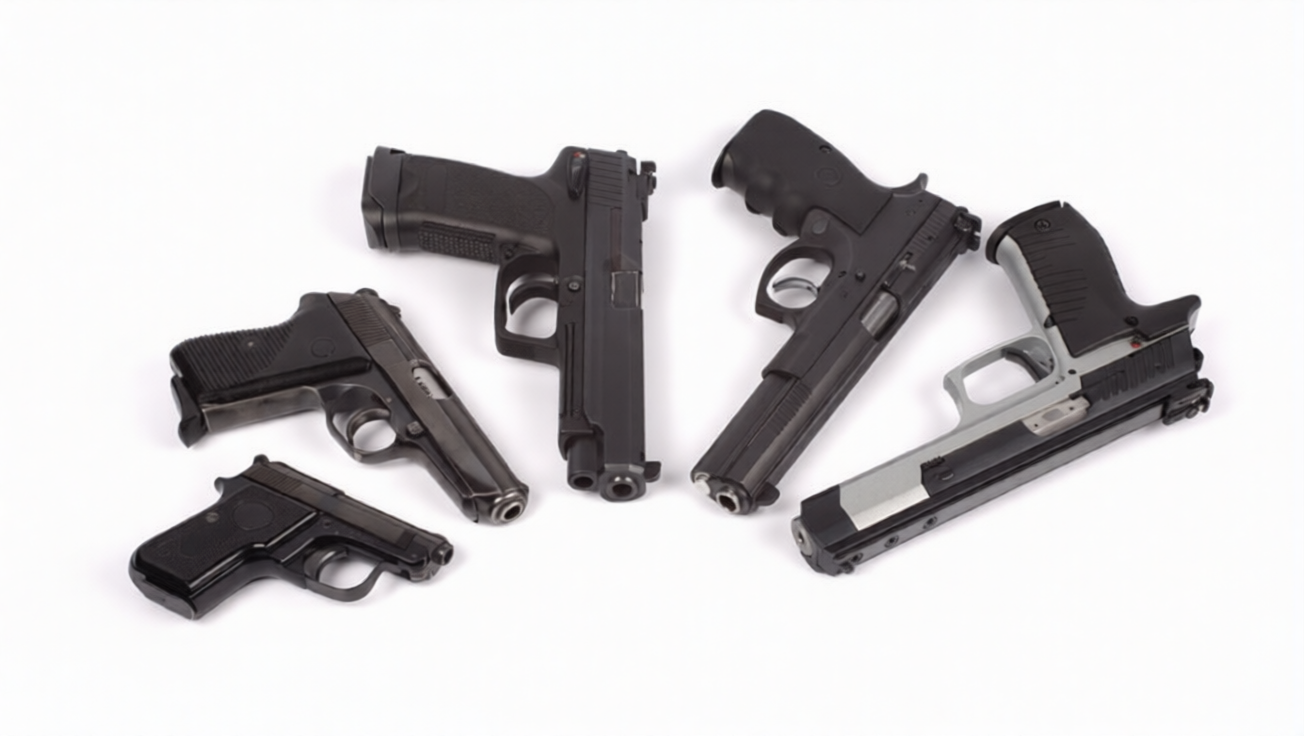
A collector's license isn't only for antiques in a display case. Pistols, revolvers, bolt-action and semi-automatic rifles and shotguns can all be part of a collection, whatever their year of manufacture, so a modern pistol can sit alongside a century-old service rifle. Schedule 2 firearms held on a Collector's License A can also be fired at a licensed range, so you can experience how these pieces handle. Bear in mind that the ammunition itself comes with a target shooter license rather than a collector's license, and that older calibres can be hard to source.
If you want to start a collection, this is almost certainly the license you need.
Collector's License A Special: for Schedule 1 firearms
Some firearms fall under a stricter category of Maltese law called Schedule 1. These are generally automatic firearms from 1946 and earlier. To buy and own them, you need the Collector's License A Special.
Schedule 1 firearms can't be fired with live ammunition, even if they're kept in full working order. They're for owning and preserving a piece of history.
The one exception is for historical re-enactments: a Schedule 1 firearm can be fitted with a blank-firing attachment (BFA) so it can fire blanks during a re-enactment.
You can only apply once you've held a Collector's License A for at least two years.
You'll need a recommendation letter from your club. Some clubs may ask you to complete a separate course before they give one.
You apply at your local police district, not online.
Once granted, the Collector's License A Special replaces your Collector's License A.
The Collector's License A Special is also the license needed to keep inherited Schedule 1 firearms.
Collector's License B: to keep existing firearms
The Collector's License B, formerly known in Malta as the "to keep" license, is for two groups of people:
People who have inherited firearms
Former target shooters or hunters who have given up the sport but want to keep their firearms
It has clear limits:
It covers Schedule 2 firearms only: shotguns, rifles and pistols.
The firearms can't be used. To shoot them, you'd need a target shooter license.
You can't buy more firearms under this license.
It doesn't cover Schedule 1 firearms, which need a Collector's License A Special.
Collecting and shooting: you can do both
You don't have to choose. You can hold a collector's license and a target shooter license at the same time, and many enthusiasts in Malta do: they build a collection on one license and shoot regularly on the other. Read our target shooter license guide to find out more.
What about ammunition?
A collector's license covers firearms, not ammunition. Under the Arms Act the entitlement to acquire and keep ammunition comes with a license held for sporting activities, which in practice means a target shooter license. It's one of the practical reasons many collectors hold both.
If you hold a Target Shooter License A you may keep up to 7,000 rounds, or up to 10,000 shotgun shells on a Target Shooter License B. The allowances are per license, so holding both means you can keep 7,000 rounds and 10,000 shells, and there's no limit on airgun pellets. In every case the ammunition must match firearms you actually hold.
Ammunition can only be bought from a licensed gun store. It is illegal for a private individual to sell ammunition in Malta, reloaded or otherwise. Schedule 1 firearms are a separate matter: they can't be fired with live ammunition at all, whichever licenses you hold.
These figures are correct at the time of writing. Confirm current limits with the Police Weapons Office, and see our target shooter license guide for the full ammunition rules.
Do you need a license at all?
Not always. These items don't need a firearms license in Malta:
Antique firearms made before 1900
Deactivated firearms, permanently converted so they can no longer fire
Replicas
They must still be registered to you, though. Contact the Police Weapons Office to find out how.
Are you eligible?
To apply for a Collector's License A, you must:
be at least 18 years old
have no criminal convictions
hold a clean police conduct certificate
have a medical certificate confirming you're in good mental and physical health to own and handle firearms. It must be no more than two months old when you submit it.
be a member of a recognised club
How to get your Collector's License A, step by step
Step 1: Check your eligibility
Make sure you meet every requirement above. Apply for your police conduct certificate early, and time your medical so the certificate is no more than two months old when you apply.
Step 2: Join a club
You can't apply on your own. You'll need to join a recognised club, such as AACTS (the Association of Arms Collectors and Target Shooters). Your club trains you, guides you through the process and gives you the recommendation letter the police need. It's also a community of experienced collectors who can advise you as your collection grows.
👉 Browse the clubs listed on Maltaguns to find the right one for you.
Step 3: Attend a Collector's License A course
Your club will run a course covering safe firearm handling, the Arms Act, safe storage and your legal duties as a license holder. It also covers the Normal Safety Procedure (NSP), the routine for checking that a firearm is empty and safe, which you'll have to carry out in the police test. Each club sets its own format, length and fees.
👉 Check our Events calendar for upcoming license courses.
Step 4: Complete the course and get your recommendation letter
When you've finished the course, your club will give you a recommendation letter to support your application.
Step 5: Apply for the test at your local police district
Take your application and supporting documents to your local police district to apply for the license test. Firearms licenses can't be applied for online. Your application will also be reviewed by the Weapons Board.
Step 6: Wait for your test date
You could get a date in about six weeks, or it could take a few months if there's a backlog.
Step 7: Prepare for the test
Go back over your course notes and practise the NSP at your club under supervision until you can do it confidently.
Step 8: Take the test
Once you pass, your license document will be posted to your home. While you wait, you can:
arrange your insurance, which you need before you get your license. Most clubs can issue it for you.
buy a suitable safe and install it at home
start thinking about the first piece you'd like to add to your collection
👉 Browse safes on the Maltaguns marketplace, or find a store near you on our stores page.
Step 9: Collect and pay for your license
When a letter arrives saying your license is approved and ready to collect, go to your local police station to pay the license fee and collect it.
How to apply for a Collector's License B
The Collector's License B doesn't follow the steps above:
You don't need to join a club, and no insurance is needed.
You must keep the firearms in a safe.
You must provide a medical certificate confirming your mental and physical health when you apply.
You apply at your local police district, not online.
Your application is reviewed by the Weapons Board before it's approved.
If you've inherited firearms, the Arms Act makes you legally responsible for them. Heirs are treated as lawfully in possession under the deceased's license for two years, and within that time the firearms must be transferred to a licensed person, deactivated or handed in to the Police. Contact the Police Weapons Office promptly and read our guide to inheriting firearms in Malta.
What does it cost?
Club prices vary, but these are typical ranges for the Collector's License A route:
Club enrolment fee: €20 – €40, once, when you join
Annual club membership: around €25, every year
Insurance: €15 – €35, before you get your license, then every year
License course: €35 – €80, once
The yearly police license fees are:
Collector's License A: €20 a year for up to 50 firearms
Collector's License A Special: €20 a year for up to 50 firearms
Collector's License B: €20 a year
The fee increases for collections of more than 50 firearms. Check with the Police Weapons Office for the current amount.
You'll also need to budget for your medical certificate, your police conduct certificate and a suitable safe. For current club prices, contact the clubs directly.
Renewing your license
Every collector's license is renewed every year.
Collector's License A and A Special: renew your club membership and insurance (normally paid together at your club), then pay the license fee at your local police station. Every five years, you'll also need a new medical certificate, no more than two months old.
Collector's License B: the only firearms license that can be renewed and paid for online, through armi.gov.mt. You don't need a club, insurance or a new medical certificate to renew.
Adding to your collection
Once you're licensed and verified on Maltaguns, you can see firearms listed by other verified license holders. Firearm listings are visible to verified license holders only. Any sale is agreed between buyer and seller, and the Police then handle the transfer:
In Malta, transfers take place at the Police Depot in Floriana.
If you live in Gozo, the transfer normally takes place in Gozo, at the Police Office in Rabat. There may be exceptions, so call the Police Weapons Office to confirm.
Maltaguns doesn't handle firearm payments or transfers. Remember that Collector's License B holders can't buy more firearms.
Your responsibilities as a licensed collector
Keep them at home: firearms are kept at the residence where your ID card is registered. For temporary storage elsewhere, speak to the Police first and tell them which firearms, why, and how they will be kept secure.
Store your firearms securely in a suitable safe at all times, so no one else can get to them.
Never fire Schedule 1 firearms with live ammunition (blank firing with a BFA is only for re-enactments), and never use firearms held on a Collector's License B.
Renew on time every year, along with your club membership and insurance where they apply.
Keep good records of your collection, such as descriptions, serial numbers and history. A well-documented collection is easier to manage and more valuable.
Follow the law on transfers. Every sale or purchase goes through the Police.
As a licensed firearm owner, you should also know that the Police can inspect how your firearms are kept. This is very rare, but it's another good reason to keep your storage and records in order.
Breaking the rules can lead to your license being revoked and legal penalties.
FAQs
Which collector's license do I need?
Most new collectors need a Collector's License A. You need a Collector's License A Special for Schedule 1 firearms, and a Collector's License B if you want to keep firearms you've inherited or no longer use.
Can I apply for a Collector's License A Special straight away?
No. You need to have held a Collector's License A for at least two years and have a recommendation letter from your club.
Can I fire the firearms in my collection?
Schedule 2 firearms on a Collector's License A can be fired at a licensed range. Schedule 1 firearms can't be fired with live ammunition, although they can fire blanks at re-enactments if fitted with a blank-firing attachment (BFA). Firearms on a Collector's License B can't be used.
Can I hold a collector's license and a target shooter license?
Yes. You can hold both at the same time.
Does a collector's license let me keep ammunition?
No. The entitlement to keep ammunition comes with a target shooter license. If you hold one alongside your collector's license, the limits are 7,000 rounds on a Target Shooter License A or 10,000 shotgun shells on a Target Shooter License B, matched to firearms you actually hold.
Where can I buy ammunition?
Only from a licensed gun store. It's illegal for a private individual to sell ammunition in Malta, reloaded or otherwise.
Do antiques need a license?
No. Antique firearms made before 1900, deactivated firearms and replicas don't need a license, but they must still be registered to you.
Can I apply online?
No. All firearms license applications go through your local police district. Only the Collector's License B can be renewed online.
How much does a collector's license cost?
The police fee is €20 a year for a Collector's License A or A Special (up to 50 firearms) and €20 a year for a Collector's License B. Club membership, insurance and the course are extra for the A route.
Do I need insurance?
Yes for the Collector's License A and A Special, renewed every year. The Collector's License B doesn't need insurance.
I've inherited firearms. What should I do?
Contact the Police Weapons Office promptly and start your license application straight away. You have two years to have the firearms transferred to a licensed person, deactivated or handed in to the Police.
Official contact: Police Weapons Office
Address: Police General Headquarters, St. Calcedonius Square, Floriana, FRN 1530 (pulizija.gov.mt/en/contact)
Opening hours: Monday to Friday, 7:30 AM – 2:15 PM (closed for a 15-minute break, 12:00 PM – 12:15 PM). Hours may change. Check with the Police before visiting.
Email: weapons.police@gov.mt
Telephone: 2294 2110
Online renewal (Collector's License B only): armi.gov.mt
Conclusion
A collector's license is your route to legally owning and preserving pieces of history. Choose the right license, join a club, complete your course, pass the police test and renew every year. Store your collection securely, follow the rules on transfers, and you'll be part of a community that keeps Malta's firearms heritage alive for future generations.
Requirements can change. Always confirm with the Police Weapons Office.